Concepts
Is AgentReach a scraper? How it actually reads platforms
The route in brief
- AgentReach doesn’t ship its own scraping engine; it installs and orders existing upstream tools.
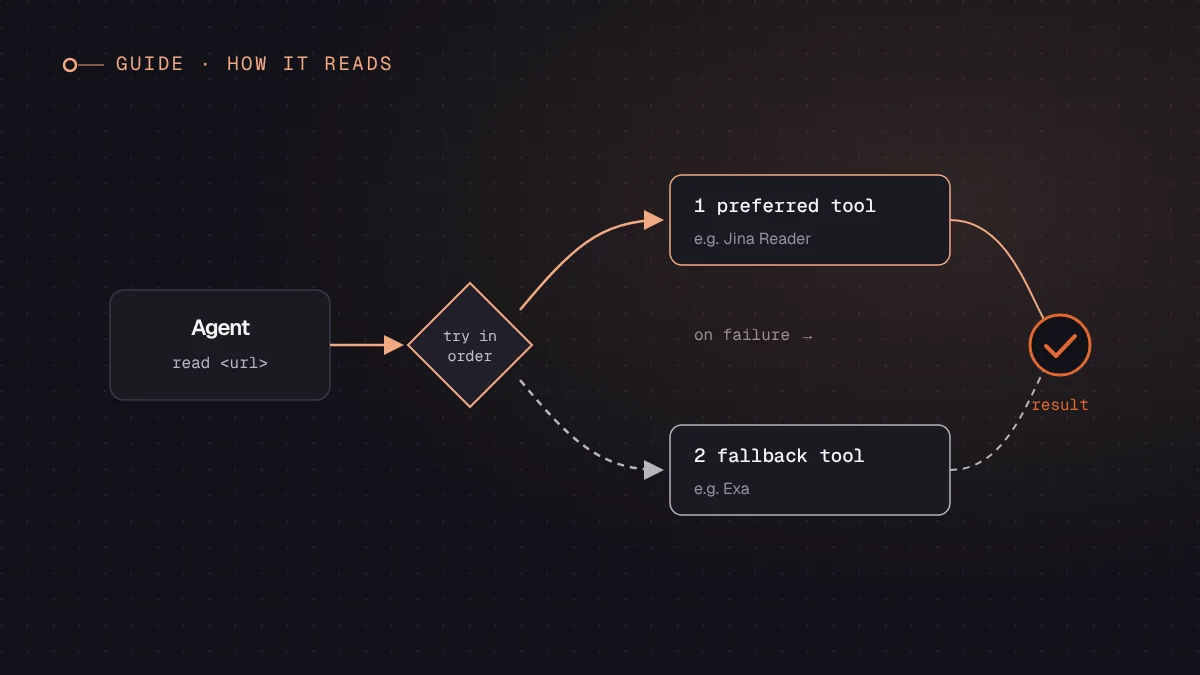
- Each action tries a preferred tool first and falls back to the next one on failure.
- Results come back in one JSON format, with clear errors when nothing works.
- It is read-only, and responsibility for how it is used stays with you.
Searches for “Agent-Reach scraper” are common, and it’s easy to see why: the tool reads Reddit threads, YouTube subtitles, Bilibili videos and more on behalf of an AI agent. But calling it a scraper misses how it works and what it is for. This article explains the design in plain terms and what it means for using it responsibly.
What people usually mean by “scraper”
A scraper is typically a program that downloads web pages in bulk and extracts data from their HTML, often built for one site and often run at scale. Scraping frameworks give you the parts to build that yourself.
AgentReach is something narrower. It is a single command-line interface that an AI agent calls when it needs to search or read a specific thing on a specific platform, and it hands back a clean result. It isn’t built for crawling and it doesn’t try to be a general data-collection framework.
Upstream tools, not one engine
Rather than writing its own extraction code for every site, AgentReach relies on established tools for each platform and takes care of installing, testing and calling them. The project credits tools such as OpenCLI, bili-cli, boss-agent-cli, yt-dlp, Jina Reader and Exa.
Those tools are installed privately under ~/.agent-reach/tools/, so copies you already have elsewhere aren’t touched. Tools with a tested version are installed at that version, and updates keep them there; the others use the newest version within a supported range.
Ordered lists: preferred tool, then fallbacks
The core idea is that every action on every platform has an ordered list of tools to try. Two examples from the project’s documentation:
- Reading a Bilibili video tries bili-cli first and falls back to Bilibili’s public API.
- Reading a web page tries Jina Reader first, then Exa.
When the preferred tool fails, AgentReach moves to the next one automatically. When a platform changes and a tool breaks, the fix is often just to reorder the list. The way your agent calls AgentReach stays the same, which is the point: platforms change constantly, and your agent shouldn’t have to.
Since 1.6, public searches and reads declared by a channel first try plain web tools, and only prepare the browser if that isn’t enough. Results are labelled with their source and content scope.
One result format
Whatever tool did the work, the agent receives the same shape: a single JSON object. On success, items holds entries with title, url, author, published_at and text, with the tool’s raw data kept in raw. On failure, there is an error code such as NEED_LOGIN or RATE_LIMITED and a hint. Our error codes guide covers them.
That uniform shape is what makes AgentReach useful to agents. A model can reason about one envelope far more reliably than about a dozen different tools’ output formats.
Read-only by design
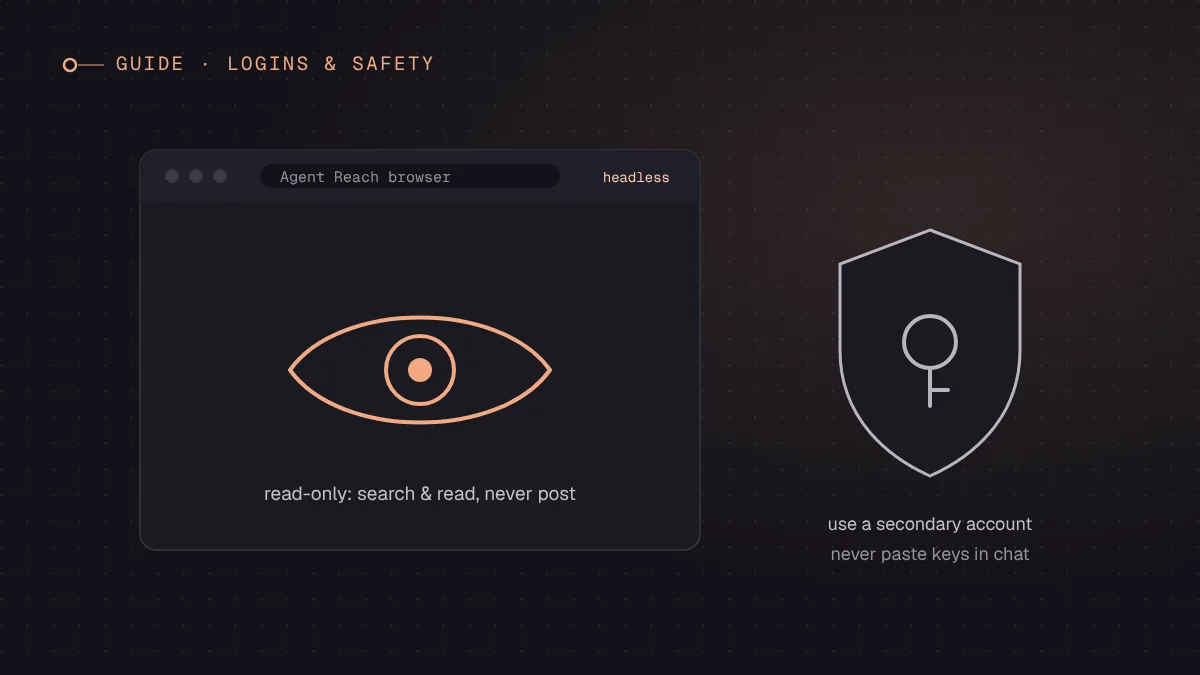
AgentReach searches and reads. It never posts, comments, likes or sends messages. Logins happen in its own dedicated browser and you always sign in yourself; it never asks for a password. The logins and safety guide explains that setup.
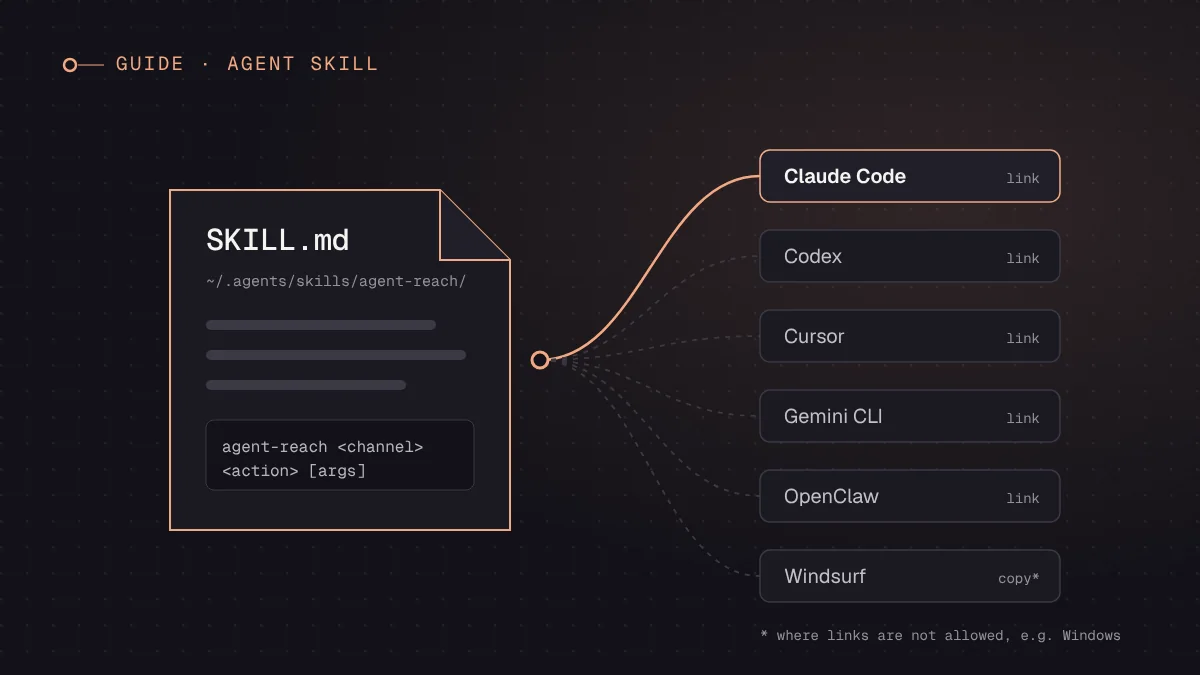
Its agent skill also reins things in. It tells agents to use their own search and fetch tools first for public content, and to call AgentReach only when those fall short. Mentioning a platform doesn’t trigger an install or a login. The skill guide covers these rules.
How it differs from a scraping framework
| AgentReach | Typical scraping framework | |
|---|---|---|
| Primary user | An AI agent making targeted requests | A developer writing extraction code |
| Site logic | Delegated to upstream tools, in order | Written per site by you |
| Output | One JSON envelope for every channel | Whatever you define |
| Write actions | None | Up to you |
| Scale | Small parallel limits on browser channels | Often built for volume |
Responsible use is still on you
None of this makes every use acceptable. Platforms set their own terms, and many restrict automated access even to public content. A few principles keep you on solid ground:
- Read what you need for a task rather than collecting broadly.
- Respect rate limits. When you see
RATE_LIMITED, wait rather than switching accounts. - Be careful with personal information you come across, and with how you store or share results.
- Use a secondary account for login channels, since platforms may restrict automated accounts.
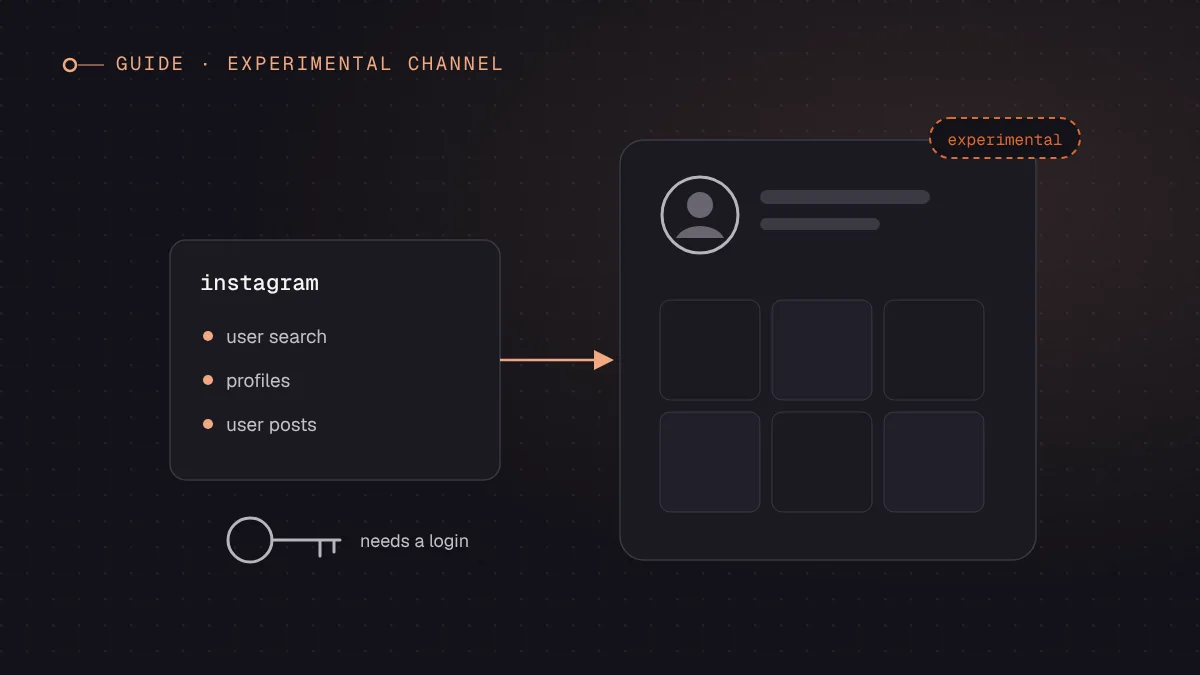
Experimental channels, such as the Instagram channel, are where platforms push back hardest, and where these habits matter most.
So, is it a scraper?
Technically, some of the tools it calls do extract content from web pages. But AgentReach itself is better described as an access layer for agents: it picks the right upstream tool, falls back when that tool fails, and returns a predictable answer. If you want a crawler, it is the wrong tool. If you want your agent to stop saying “I couldn’t access that”, it is aimed squarely at you.
Ready to try it? Start with the installation guide or go to the download section.